Best Brand Asset Management Software in 2026
The best brand asset management software in 2026, ranked for 3-20 person marcom teams: seven platforms, six criteria, and where each one falls short.

The best brand asset management software in 2026 depends on one question first: how does each platform let you share approved assets with the people who use them? A library is only as good as its front door.
- Clipido: best for 3-20 person marcom teams that need branded galleries, controlled workspaces and AI search without an enterprise rollout.
- Frontify: best when living brand guidelines plus DAM in one platform is the priority; bigger investment.
- Bynder: best for large, multi-team organizations that need enterprise-scale governance; quote-based pricing and heavier to run.
- Brandfolder: best for teams that want usage analytics and self-serve distribution; enterprise-oriented, quote-based pricing.
- Air: best for lean, high-output creative teams that want fast AI tagging and transparent published pricing.
- Marq: best when the core problem is keeping non-designers on-brand inside locked templates, not library scale.
- Filestage: not a DAM at all; it solves the review and approval step just before assets enter your library.
Rankings here are our editorial judgment. We applied the same six criteria to every entry, including our own platform, so you can see where the tradeoffs actually sit.
Brand asset management vs. DAM: a 60-second orientation
Brand asset management software is DAM with a brand job: it does not just store logos and photos, it governs how they get used and distributed. Vendors define it slightly differently. Frontify frames it as centralizing assets, standards and on-brand content creation in one platform. Bynder positions it as making the right assets accessible and distributing them consistently to internal and external parties. Templafy adds the workflow angle: controlling how brand assets are used as they move through the organization.
If you want the full conceptual background, read our brand asset management software explainer first. This article focuses on comparing the tools.
Six criteria we ranked the platforms on
- Brand portal. Can you give external people a curated, account-free or low-friction place to find what they need? We compare this directly in what is a brand portal.
- Controlled sharing. Granular permissions, expiring links and defined audiences for internal teams, agencies and press.
- Guideline distribution. Are guidelines attached to the assets, or buried in a PDF nobody opens?
- Findability. Search quality, AI tagging and metadata that people actually use.
- Collection workflows. Upload links and intake from photographers, agencies and partners.
- Pricing transparency and entry cost. Can a 3-20 person marketing team find out what it costs and get started realistically?
The shortlist, ranked for 3-20 person marcom teams
1. Clipido: best for small marcom teams with big shared libraries
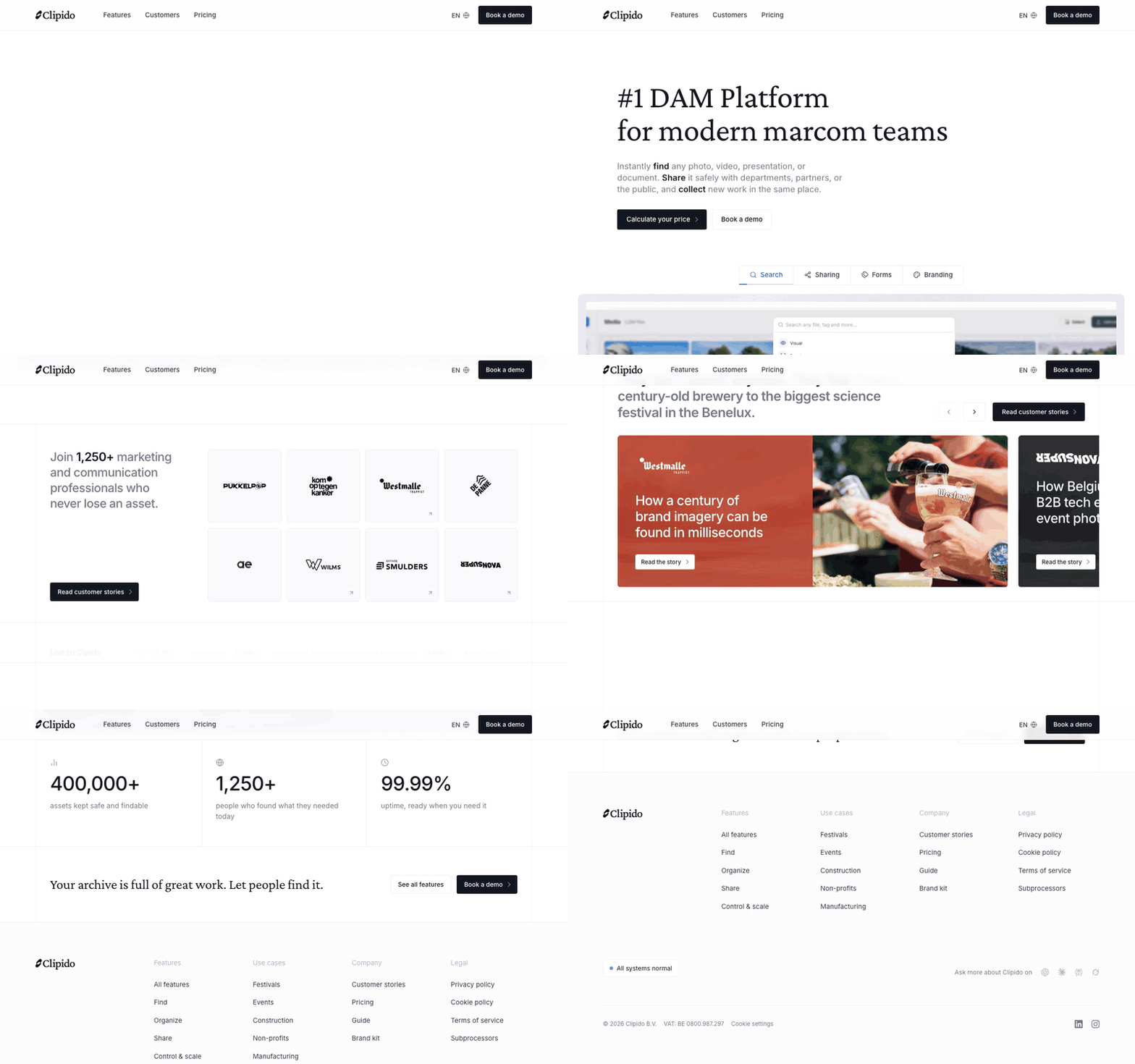
Scrolling through clipido.com, captured 20 October 2026
Clipido is a digital asset management platform for marketing and communication teams. It helps organizations find photos, videos, presentations and documents, share them with departments, partners or the public, and collect new work in the same place.
Where it fits the brand asset job:
- Sharing. You share curated galleries and controlled workspaces with internal teams, agencies, press, customers and other external recipients, so the sales deck and the press kit never live in the same unlocked folder.
- Findability. AI search covers visual content, text inside images, people and similarity, which matters when your library is ten years of photography nobody tagged.
- Collection. You collect photos and files from photographers, agencies, colleagues and partners directly in the platform.
- Event distribution. Built for getting event photos out to speakers, guests, partners and social or marketing teams quickly; De Roma finds event photos in seconds with it.
- Migration. Clipido migrates fragmented archives from SharePoint, Google Drive, Dropbox and local servers into one searchable library.
The tradeoff: Clipido is built for marcom teams managing shared libraries, not for enterprise-scale multi-brand governance programs. If your brand lives across dozens of sub-brands and regional markets, an enterprise platform may be the better fit. Clipido publishes transparent pricing on its pricing page, which also sits next to our cost overview of digital asset management.
If you run a marcom team of 3-20 people and want to see how branded galleries, controlled workspaces and AI search would work with your own files, contact Clipido to discuss the platform and book a demo. Bring one messy folder; we will show you the same library, found and shared.
2. Frontify: best for living guidelines connected to your assets
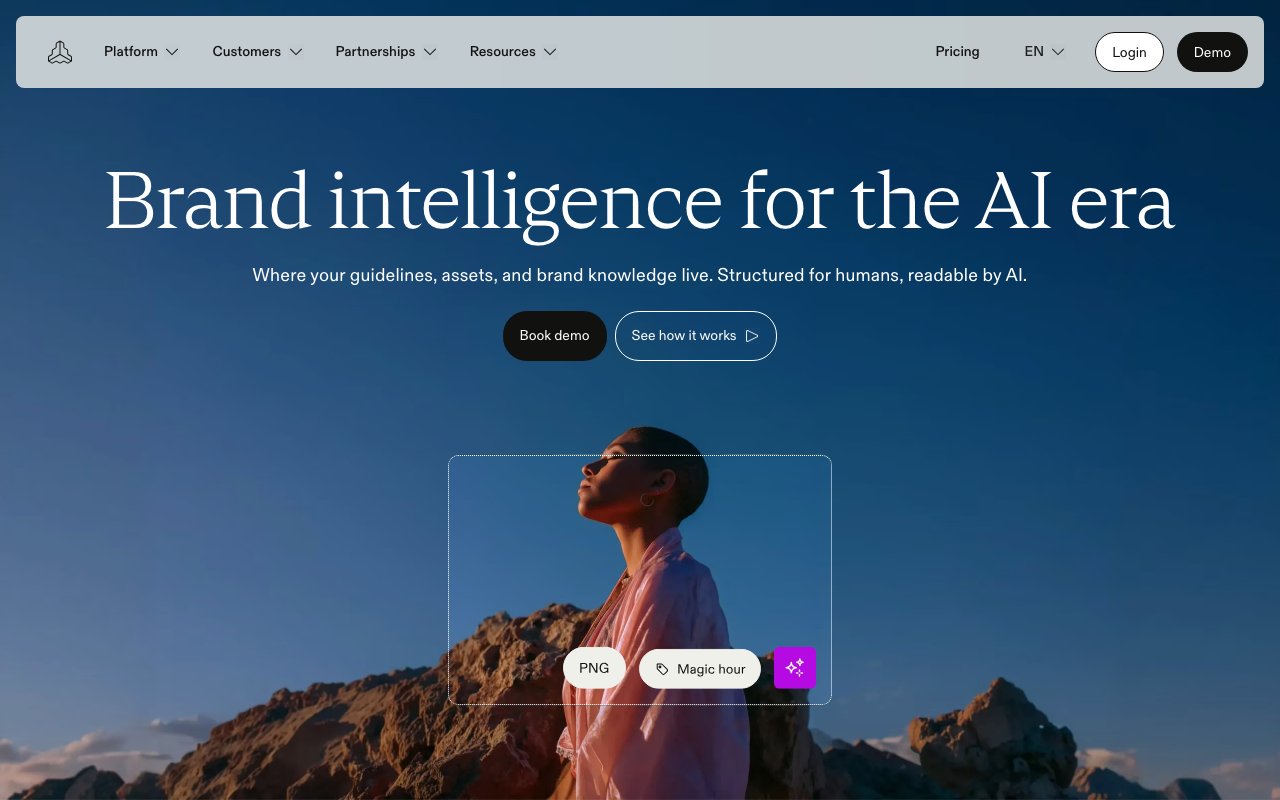
frontify.com, captured 20 October 2026
Frontify combines asset management with interactive brand guidelines, content creation templates and collaborative workflows. Its brand portals give each audience, agency or sub-brand its own curated, access-controlled space, and guidelines update in real time instead of living in PDFs.
The tradeoff: Frontify is a governance-first platform with quote-based pricing and a broader rollout footprint. That is a real strength if brand consistency across many markets is your main job, and overhead if your main job is getting a photo library usable again.
3. Bynder: best for enterprise brand governance at scale
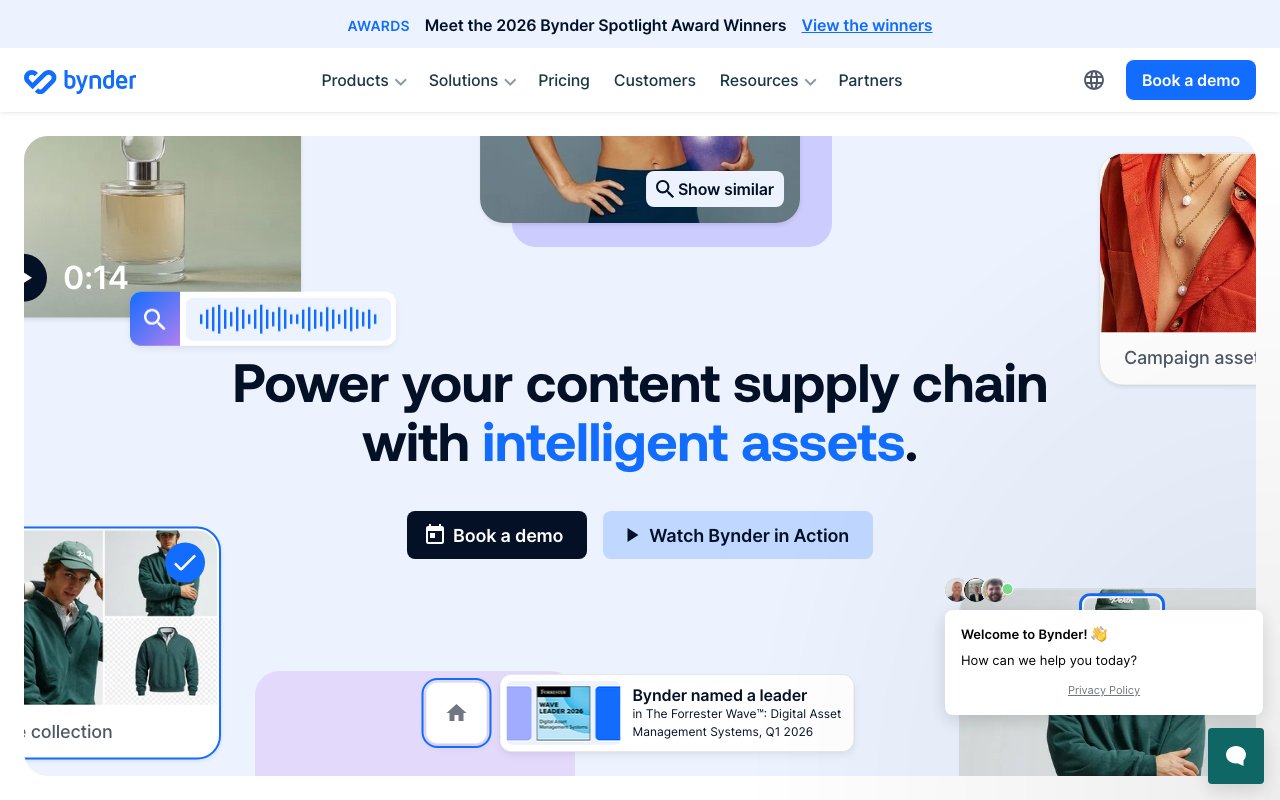
bynder.com, captured 20 October 2026
Bynder is an enterprise DAM with a Brand Guidelines module for web-based brand guides, Studio for templated on-brand content creation, and a large integration marketplace for the rest of your stack. For large organizations with many teams feeding the same brand, it is the established default for a reason.
The tradeoff: enterprise power comes with enterprise weight. Pricing is quote-based and procurement can take months; we compared the details in Clipido vs. Bynder. For a 3-20 person marketing team, you may pay for scale you do not need.
4. Brandfolder: best when asset analytics matter
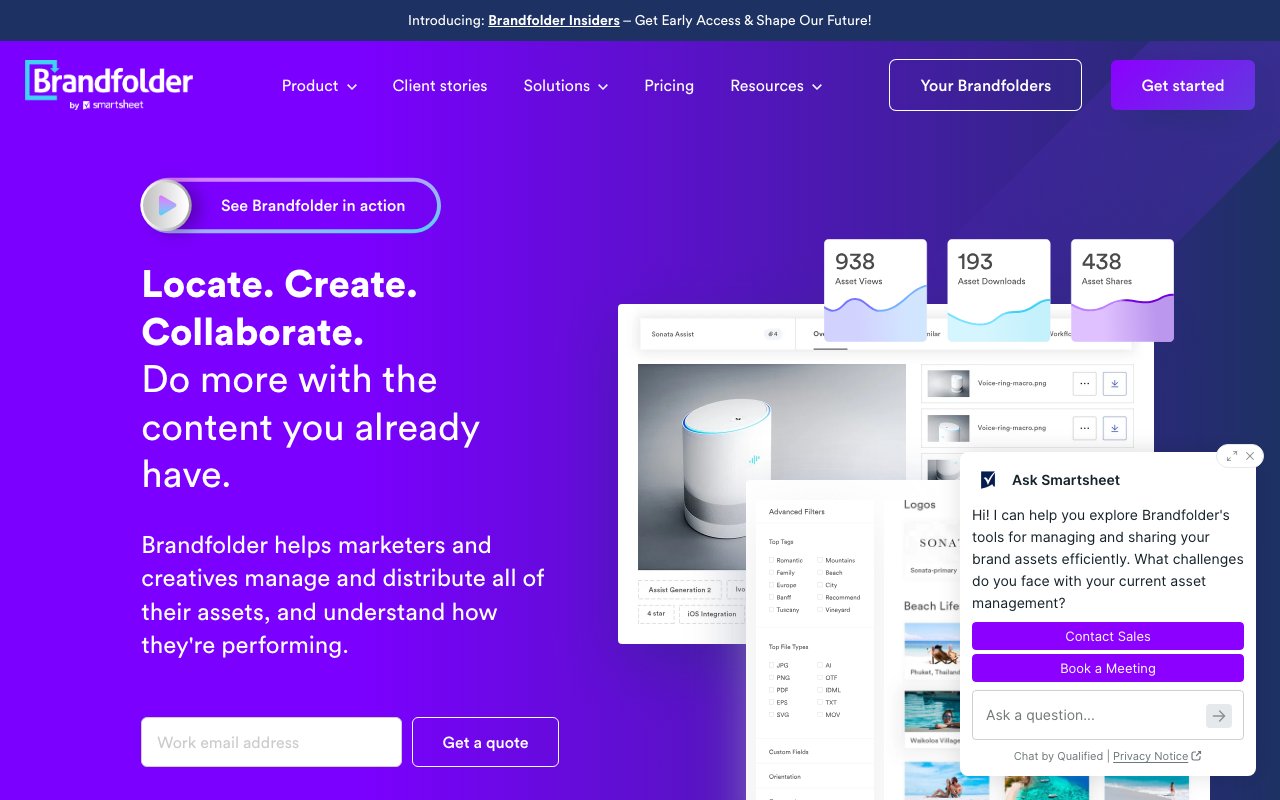
brandfolder.com, captured 21 October 2026
Brandfolder, now part of Smartsheet, is a DAM focused on usability and distribution. Its product suite covers Collections and Sections for organized sharing, AI-powered auto-tagging for search, asset and user analytics that show which assets actually get used, and an online Brandguide for digital guidelines.
The tradeoff: Brandfolder targets enterprise buyers and its pricing is quote-based. If you want to know how your assets perform across channels, it is strong. If you want a fast, transparent start for a smaller team, check the entry cost first.
5. Air: best for lean teams that ship a lot of creative
air.inc, captured 20 October 2026
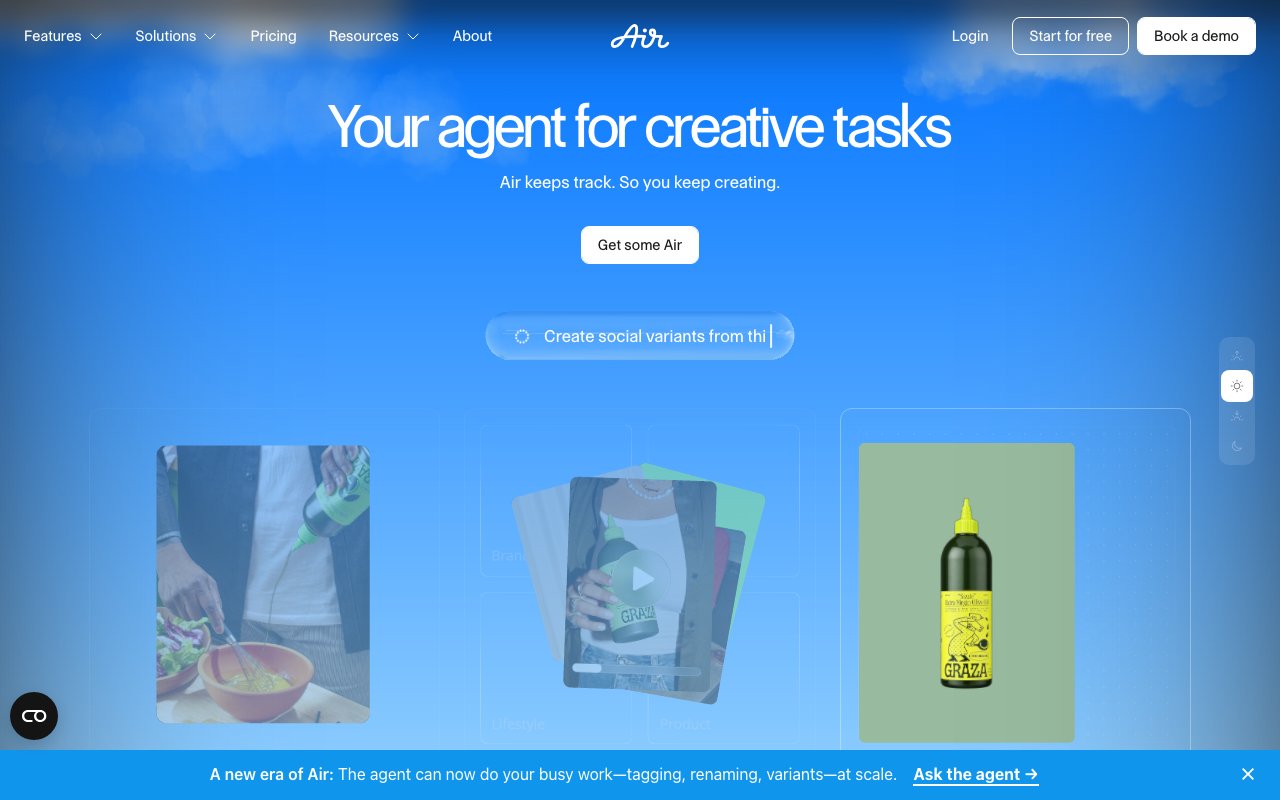
Air turns brand standards into a visual workspace with AI tagging, search by what an asset contains, access-controlled libraries and approval workflows. Unlike most of this list, it publishes its pricing: a real free plan, and a Starter plan at $25 per month billed annually, with unlimited seats on every plan.
The tradeoff: Air is optimized for creative operations and speed, with less emphasis on formal multi-brand governance structures. If your problem is velocity, it fits. If it is complex permission governance across many brands, keep reading.
6. Marq: best when non-designers keep going off-brand
marq.com, captured 21 October 2026
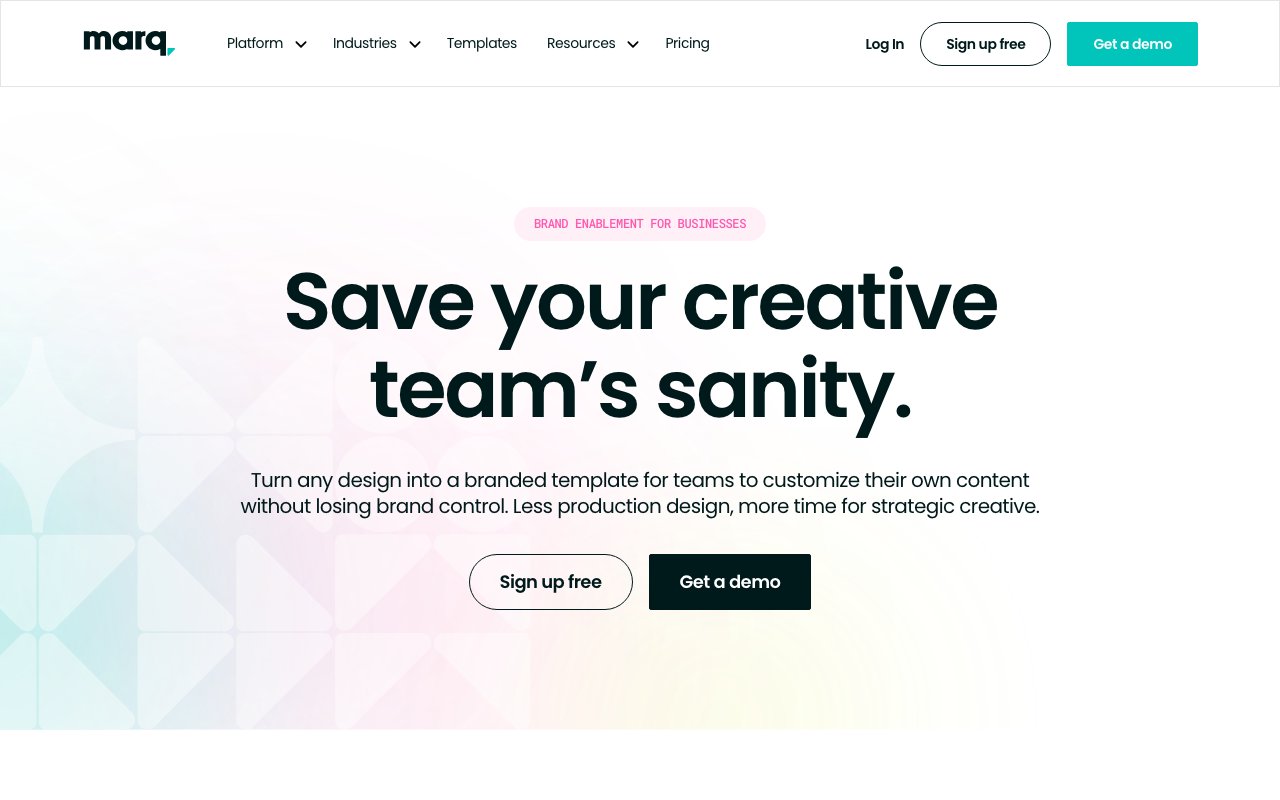
Marq (formerly Lucidpress) is a brand enablement platform centered on lockable templates. Brand managers embed brand standards directly into templates so anyone can customize content without breaking the logo, colors or fonts. It includes a brand asset manager as a lite DAM and integrates with existing DAMs.
The tradeoff: Marq solves the creation-side problem. It is not built to be the full searchable library for a decade of photography and video, so teams with big media archives usually pair it with a DAM rather than replace one.
7. Filestage: best for approvals, not for the library itself
filestage.io, captured 21 October 2026
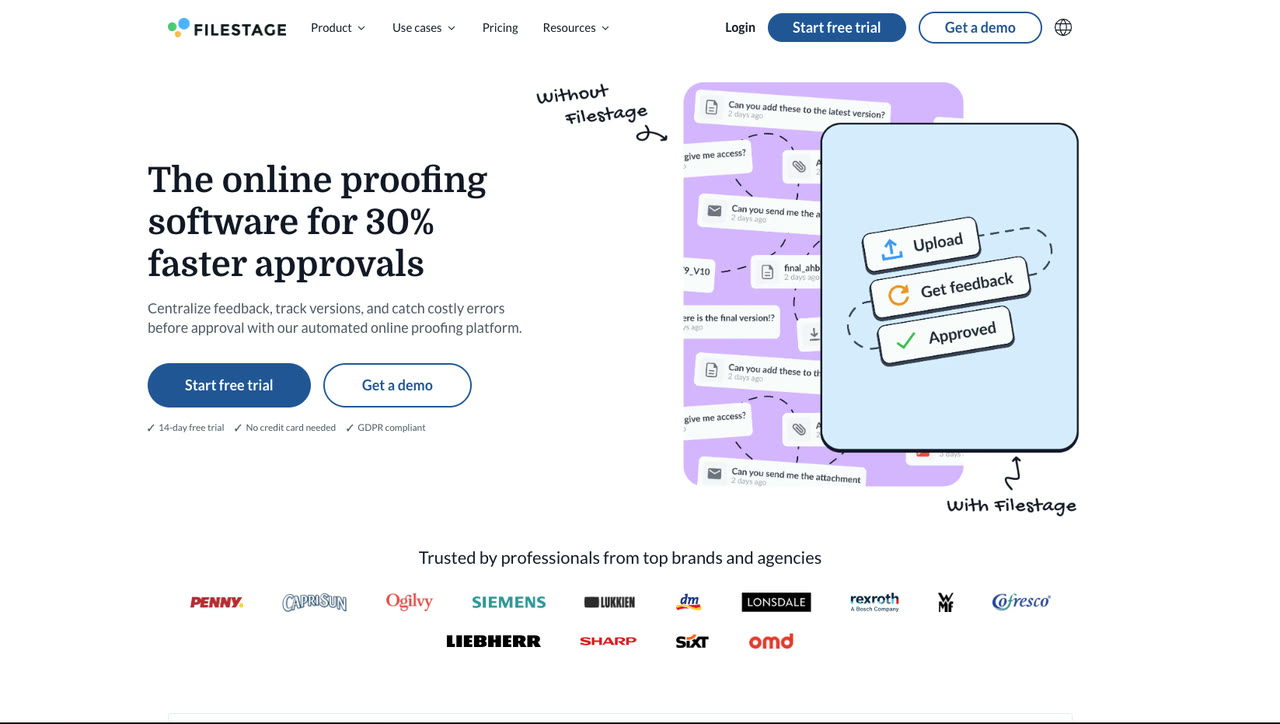
Filestage is a review and approval platform: structured multi-step sign-offs, in-context comments and review checks against your brand guidelines. Its own listicle is explicit about the limit: it is not a DAM, and most customers pair it with one.
The tradeoff: it is the one transparent-priced enterprise-adjacent option here, with a free plan and a Starter plan at €249 per month, or two months free on yearly billing. Include it when your bottleneck is approvals before assets enter your library, not the library itself.
When an enterprise platform is worth it
A common misconception is that a serious brand needs an enterprise platform. Pick Frontify or Bynder only when you have the budget to spend more than $30,000 a year and you will actually use what that money buys: AI add-ons, plugins, connections to the rest of your stack and custom development. For reference, Bynder's median contract is around $39,000 a year. Their portals and governance depth are real, and so is the bill.
If you do not need all of that, pick Clipido. Most 3-20 person marcom teams are dealing with a fragmented archive, an over-shared Google Drive and partners who cannot find the current logo, and that is exactly the job Clipido is built for. Our guide to choosing a DAM walks through testing each option against your own files before you commit.
How pricing transparency varies
Of the platforms here, Air, Marq, Filestage and Clipido publish self-serve pricing. Frontify, Bynder and Brandfolder are quote-based, which is common in this category. For a fuller picture of what DAM tools actually cost, see our digital asset management pricing overview. Clipido publishes its price calculator on its pricing page.
Frequently asked questions
What is the difference between brand asset management and DAM?
DAM stores and organizes digital assets. Brand asset management adds governance: guidelines, permissions and distribution controls that keep assets on-brand as they spread. In practice, most modern DAMs handle both, and the category boundary is soft.
What is a brand portal?
A curated, access-controlled page where internal teams, agencies, press or partners find and download approved assets and guidelines, without an account or admin training. We explain it in depth in what is a brand portal.
What does brand asset management software typically cost?
It varies widely: self-serve plans from around $25 per month at the light end, review tools from around €249 per month, and quote-based enterprise contracts at the top end. Read our pricing explainer for the details.
Do we need it if we already use Google Drive or SharePoint?
Usually not on top of it, but instead of it for media. When file counts grow, sharing controls and search break down; our comparison of DAM vs. cloud storage explains why.
